
Categories
Articles Azure

What is Azure Identity and Access Management (AIM)?

Image by creativearton Freepik

With the proliferation of cloud computing, organizations need robust and secure solutions for identity and access management (IAM). Azure Identity and Access Management (AIM) is a platform that enables you to manage access and identities to your Azure resources. AIM unifies various Azure IAM services such as Azure RBAC, Azure AD, and Azure MFA into a single platform.Key Features of AIM:

  • Centralized identity management: AIM provides a single identity store for all your Azure resources.
  • Easy access management: AIM lets you easily manage access to Azure resources with Azure RBAC.
  • Enhanced security: AIM helps you protect your Azure resources from unauthorized access with Azure AD and Azure MFA.
  • Compliance: AIM helps you control access controls and meet compliance requirements.

AIM Use Cases:

  • Manage access to Azure resources: AIM enables you to easily manage access to Azure resources with Azure RBAC.
  • Manage identities: AIM provides a single identity store for all your Azure resources with Azure AD.
  • Enhance security: AIM helps you protect your Azure resources from unauthorized access with Azure AD and Azure MFA.
  • Ensure compliance: AIM helps you control access controls and meet compliance requirements.

Benefits of AIM:

  • Simplified IAM management: AIM simplifies IAM management by consolidating Azure IAM services into a single platform.
  • Increased security: AIM helps you protect your Azure resources from unauthorized access with Azure AD and Azure MFA.
  • Improved compliance: AIM helps you control access controls and meet compliance requirements.

Technical Details:

  • Azure RBAC: Azure RBAC is an authorization system that lets you manage access to Azure resources. Roles are predefined permissions with specific sets of permissions. The scope can be a subscription, a resource group, or a single resource.
  • Azure AD: Azure AD is an identity service that enables you to manage users and groups in your organization. Azure AD offers features such as user authentication, single sign-on, and multi-factor authentication.
  • Azure MFA: Azure MFA is a security service that lets you add an additional authentication factor to verify a user’s identity. Azure MFA offers a variety of authentication methods, such as SMS, password app codes, or phone calls.

Create a Secure and Compliant IAM Environment with AIM:

AIM is a powerful tool to protect your Azure resources and meet compliance requirements. Using AIM, you can do the following:

  • Use strong authentication and authorization: Provide user authentication and authorization with Azure AD and Azure MFA.
  • Minimize access: Give users only the access they need.
  • Ensure compliance: Control access controls and meet compliance requirements.

The result:

AIM provides a comprehensive IAM solution for your Azure resources. With AIM, you get a powerful tool to protect your Azure resources, simplify IAM management, and meet compliance requirements.


If you have any questions or details you would like to add, feel free to write me.
Categories
Articles Azure

Azure VM: Resolving the c0000034 Fatal Error

Azure VM: Resolving the c0000034 Fatal Error

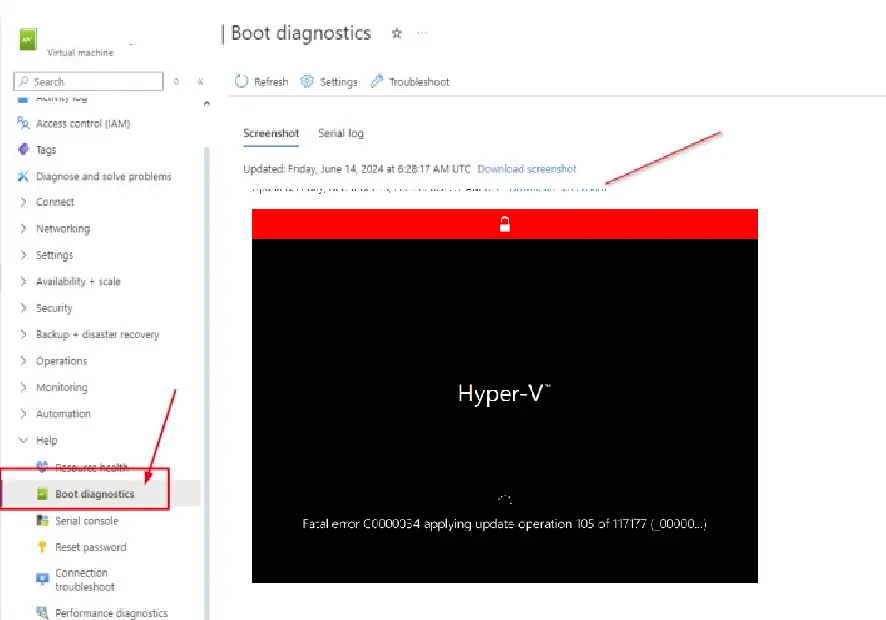
One of the critical issues you may encounter when working with Azure Virtual Machines (VMs) is the “c0000034” fatal error. This error typically occurs in Windows operating systems and is usually caused by a corrupt registry hive. The Windows registry is a critical database that stores configuration settings and options for the OS and installed applications. If the registry becomes corrupt, it can prevent the system from booting, leading to serious errors.

In this article, I will explain step-by-step how to resolve the c0000034 error on an Azure VM. The steps are simplified for easy understanding, even if you’re new to system administration.

azure boot


What is the c0000034 Error?

The c0000034 error is a fatal system error in Windows that typically occurs when registry files such as SYSTEM and SOFTWARE become corrupt. Without these crucial files, the system is unable to boot properly. The solution to this issue involves replacing these corrupt files with backups of healthy versions.


Solution: Steps to Fix the c0000034 Error in Azure VM

You can resolve this issue by accessing the corrupt disk and restoring the registry files from a backup. Follow these steps using the Azure portal:

  1. Stop the Faulty VM
    First, go to the Azure portal and stop the virtual machine experiencing the error. This ensures that you can safely modify its disk without interference.
  2. Create a New Virtual Machine
    Create a new virtual machine with the same operating system and disk size as the original. This new VM will be used to access the disk from the faulty VM and make the necessary changes.
  3. Attach the Original VM’s Disk to the New VM
    Attach the disk from the original virtual machine to the new virtual machine as a data disk. This allows you to access the files of the faulty VM without booting it.
  4. Start the New VM and Connect to It
    Start the newly created VM and connect to it using Remote Desktop.
  5. Assign a Drive Letter to the Attached Disk
    Once connected, open Disk Management on the new VM. Assign a drive letter (e.g., D:) to the attached disk, so it is accessible from File Explorer.
  6. Backup the Corrupted Registry Files
    Navigate to the attached disk, and go to C:\Windows\System32\config. Here, you will find the corrupted registry files:

    • Rename the SYSTEM file to SYSTEM.old.
    • Rename the SOFTWARE file to SOFTWARE.old.
      By renaming these files, you are effectively backing them up in case you need to revert the changes later.
  7. Restore Healthy Versions from RegBack
    In the attached disk, navigate to C:\Windows\System32\config\RegBack. This folder contains backup copies of the registry files:

    • Copy the SYSTEM and SOFTWARE files from the RegBack folder and paste them into the config folder, replacing the corrupted versions.
  8. Restart the New VM
    After replacing the corrupt registry files, restart the new virtual machine. If everything has been done correctly, the VM should now boot without encountering the c0000034 error.


    Conclusion

    By following these steps, you can successfully resolve the c0000034 error caused by corrupt registry files. Accessing the faulty VM’s disk from another virtual machine allows you to replace the corrupt files with healthy backups, enabling the system to boot properly again. Remember, registry corruption can be caused by sudden shutdowns or disk issues, so it’s important to regularly back up your data to prevent future occurrences.

    If you encounter other issues in Azure, you can always refer to Microsoft’s official documentation for further assistance and troubleshooting tips.


    These steps serve as a guide for system administrators and IT professionals dealing with critical Azure VM errors. Taking care to back up your files and follow the steps precisely will help you recover your system with minimal disruption.

Categories
Articles Azure

Detailed Review of Azure ARM

Azure Resource Manager (ARM) is one of the cornerstones of Microsoft Azure and a powerful tool that simplifies infrastructure management. In this section, we will explore the functions, benefits and use cases of ARM in more detail.

Functions of ARM:

  • Resource Creation and Management: ARM can create and manage a variety of Azure resources such as virtual machines, storage accounts, networks and databases through a single template.
  • Repeatability: ARM templates enable consistent and repeatable infrastructure setup across multiple environments. This reduces the risk of error and simplifies the management process.
  • Automation: ARM can be integrated with tools such as Azure DevOps to automate infrastructure deployment and updates.
  • Cost Control: ARM helps optimize costs by providing detailed control over resource usage and billing.
  • Security: ARM protects Azure resources from unauthorized access using security features such as role-based access control (RBAC).

Benefits of ARM:

  • Consistency and Repeatability: ARM templates ensure error-free and consistent infrastructure deployment across different environments.
  • Efficiency and Automation: ARM automates manual processes, making infrastructure management faster and more efficient.
  • Cost Savings: ARM helps reduce costs through resource optimization and automation.
  • Scalability: ARM can be used to easily manage large and complex infrastructures.
  • Security and Compliance: ARM supports Azure’s security and compliance features.

ARM Use Cases:

  • Development and Test Environments: ARM is ideal for building and managing development and test environments quickly and easily.
  • Production Environments: ARM can be used to set up and manage production environments in a consistent and repeatable way.
  • Hybrid Cloud Environments: ARM enables managing Azure resources in hybrid cloud environments from a single platform.
  • Application Lifecycle Management: ARM can be integrated with tools such as Azure DevOps to provide infrastructure automation across the application lifecycle.

Examples:

  • Web Application Deployment: Using an ARM template, you can create the necessary Azure resources such as virtual machines, storage accounts and networking with a single command.
  • Create Database Infrastructure: Using an ARM template, you can automatically create infrastructure such as SQL database server, storage and networking.
  • Hybrid Cloud Synchronization: You can automatically synchronize data between Azure and on-premises infrastructure using an ARM template.

Conclusion:

Azure ARM is a powerful and flexible tool for managing Azure infrastructure. The benefits of ARM — consistency, repeatability, automation, and scalability — help you manage IT infrastructure faster, more securely, and at lower cost.

Categories
Articles SQL Windows

Azure Data Studio or SSMS — which should I use?

Azure Data Studio (ADS) and SQL Server Management Studio (SSMS) are both database management tools used for different purposes, and which tool to use depends on your needs and preferences.

Azure Data Studio (ADS):

Azure Data Studio (ADS):
  • ADS offers cross-platform support, meaning it can be used on Windows, macOS, and Linux. This can be essential for collaboration among team members using different operating systems.
  • It is primarily designed for database development and query creation. It is used for editing queries, visualizing query results, and managing databases at a high level.
  • It comes with an integrated query editor with advanced development features such as syntax highlighting, auto-completion, and code hints.
  • ADS can work with multiple database systems (SQL Server, PostgreSQL, MySQL, MongoDB, etc.) and allows you to create different connection profiles.
  • You can extend its functionality using extensions and plugins, enabling you to customize your workflow by installing or developing specific extensions.

SQL Server Management Studio (SSMS):

SQL Server Management Studio (SSMS):
  • SSMS only runs on the Windows operating system and is specifically designed for managing SQL Server. Therefore, it is recommended for those working primarily with SQL Server databases.
  • SSMS allows you to create, edit, manage, and back up database objects. It provides tools for tasks like database backup, security configuration, and performance monitoring.
  • It offers specialized reports and performance monitoring tools for professional SQL Server administration.
  • SSMS provides specialized tools and design surfaces for tasks like creating databases, writing stored procedures, and designing workflows.
  • It offers advanced monitoring and security features for database administrators.

In conclusion, the choice between Azure Data Studio (ADS) and SQL Server Management Studio (SSMS) depends on your project requirements, team member preferences, and the database system you are working with. If you have general database development and query-writing needs across various platforms, ADS might be a better fit. However, if you are primarily working with SQL Server and handling administrative tasks, SSMS is the more suitable choice. To make the best decision for your needs, consider trying out both tools and assessing which one aligns better with your workflow.


If you have any questions or details you would like to add, feel free to write me.
Categories
Articles Azure Backups

Accessing Azure Blob Storage with Access Keys

Microsoft Azure Storage Explorer: Microsoft Azure’s cloud platform integrates with a free tool known as Microsoft Azure Storage Explorer. This tool is developed to simplify the management and exploration of data stored in the Azure cloud environment. Azure Storage Explorer provides users with a user-friendly interface to perform a range of tasks such as accessing data sources, viewing, uploading, downloading, editing, and deleting data.

The primary use cases of Microsoft Azure Storage Explorer include:

  1. Managing Azure Storage Resources: Azure Storage Explorer can be used to manage various Azure storage services, including Azure Blob Storage, Azure Table Storage, Azure Queue Storage, and Azure Cosmos DB. This allows users to view, modify, and edit the content of these services.
  2. Data Transfer: Storage Explorer facilitates data transfer between your local computer and Azure or vice versa. It can be used to quickly upload or download large files or datasets to/from Azure Blob Storage.
  3. Blob Storage Management: Specifically for Azure Blob Storage, you can use it to view blob containers and their contents, create new containers, upload, download, delete blobs, and perform sorting operations.

Installing Microsoft Azure Storage Explorer: Here are the steps to install Microsoft Azure Storage Explorer:

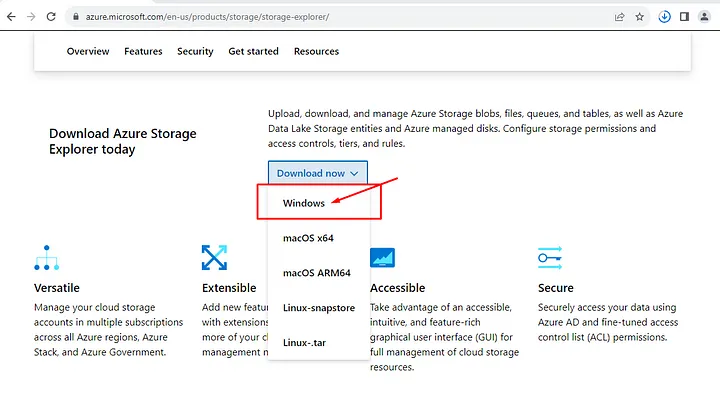
  1. Download: You can download Microsoft Azure Storage Explorer from the official website. You can directly download it using the following link: Microsoft Azure Storage Explorer Download Page.
Microsoft Azure Storage Explorer İndirme Sayfası

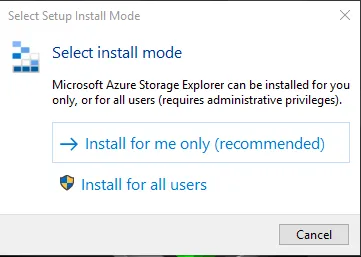
2.Run the Installer: After downloading, run the installer. The installer may check for prerequisites before starting the installation process.

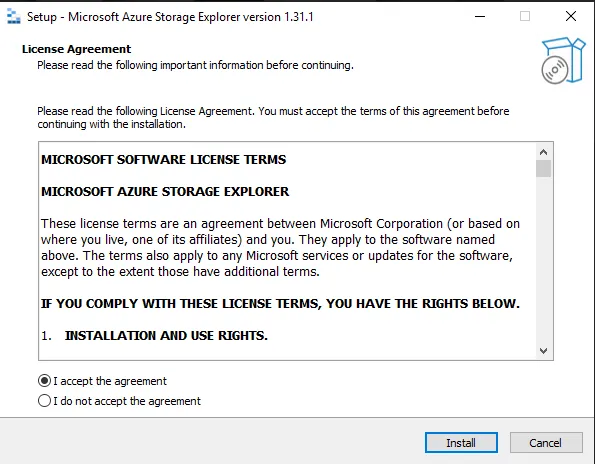
3.Installation Options: When the installer starts, you can configure installation options. Typically, you may want to proceed with the default options, but you can change installation paths and other settings as needed.

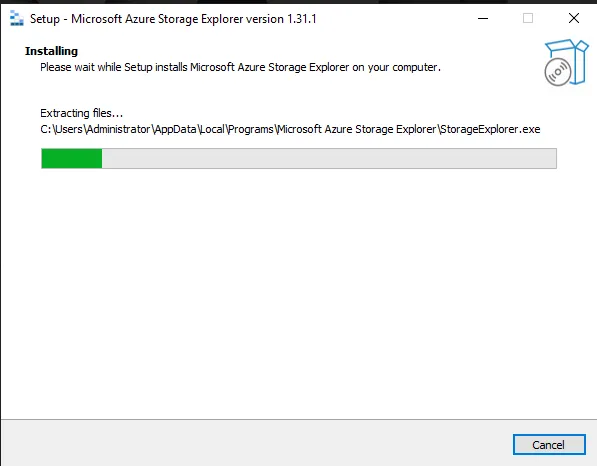
4.Installation Process: The installation process will begin. Azure Storage Explorer and its dependencies will be installed on your computer. This process may take a few minutes.

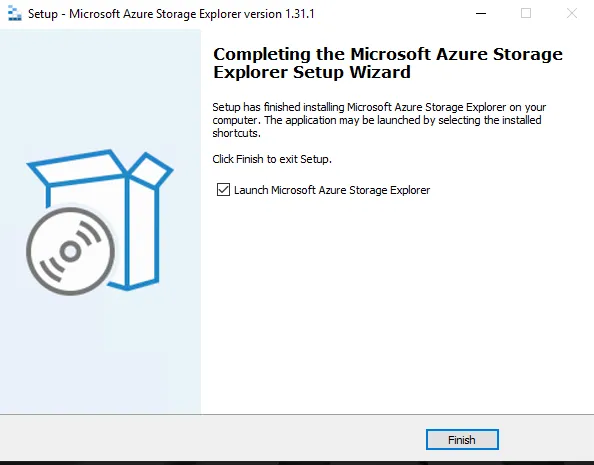
5.Wait for Installation to Finish: Once the installation is completed, the installer will show you a completion message. You can click “Finish” or “Open” to launch Azure Storage Explorer.


Connecting to Azure Blob Storage with Access Keys: You can connect to Azure Blob Storage using access keys via Azure Storage Explorer with the following steps:

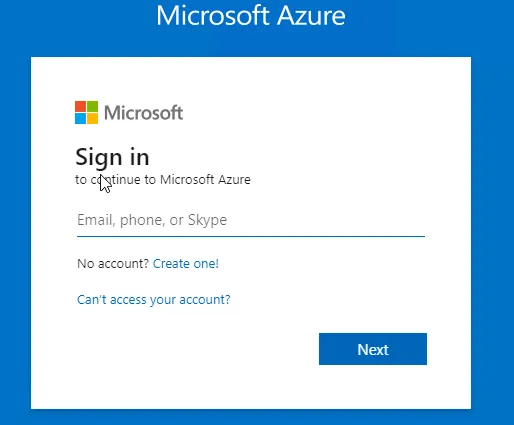
1.Sign In to Azure Portal: To access your Azure Blob Storage account, sign in to the Azure Portal.

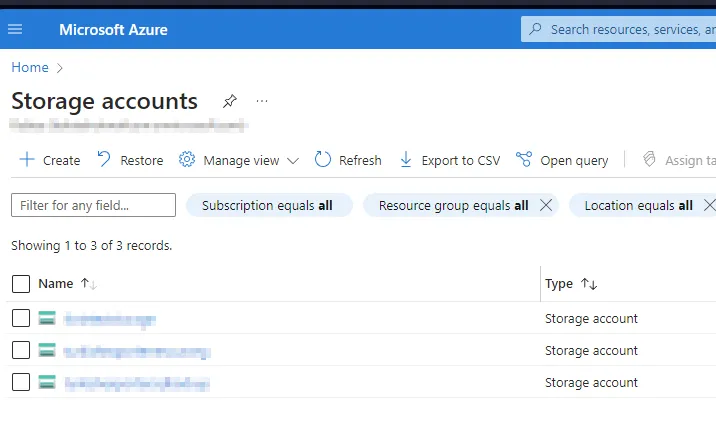
2.Select Your Blob Storage Account: After signing in, select your Blob Storage account or create a new one.

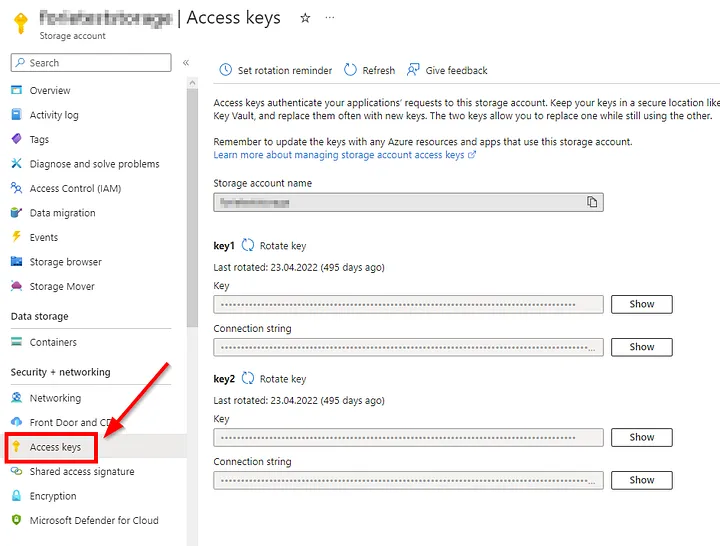
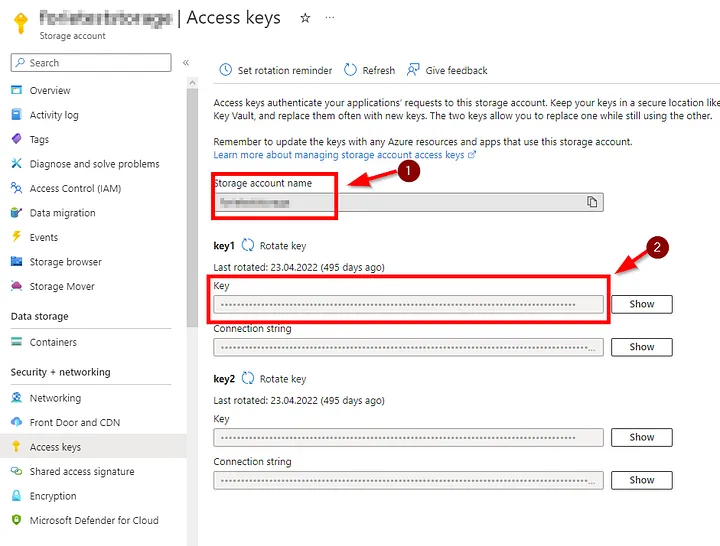
3.Find Your Access Keys: On your Blob Storage account page, there should be an option on the left for “Access keys” or something similar. Click on this option to find your access keys.

4.Copy the Access Keys: On the access keys page, you will see two keys under “Key1” or “Key2”. Choose one of these keys and click the “Copy” button to copy the key to your clipboard.

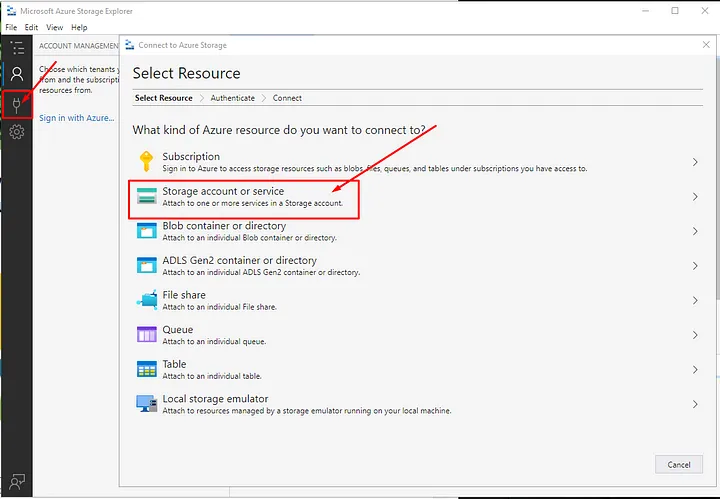
5.Launch Azure Storage Explorer: Start the Azure Storage Explorer application on your computer.

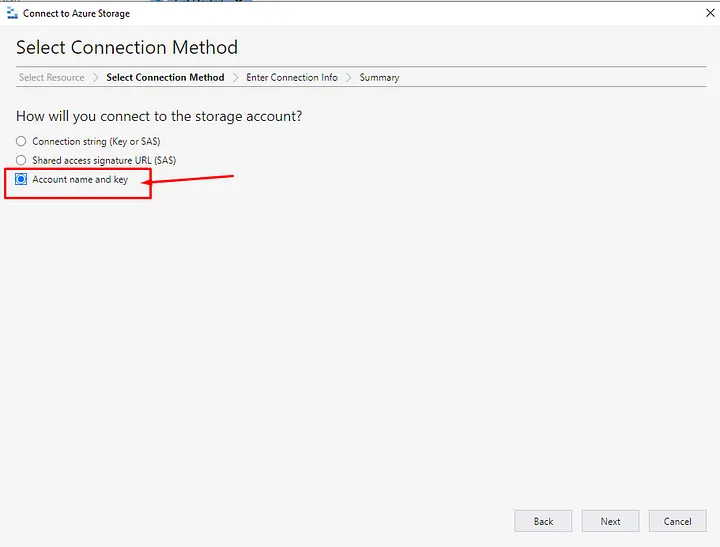
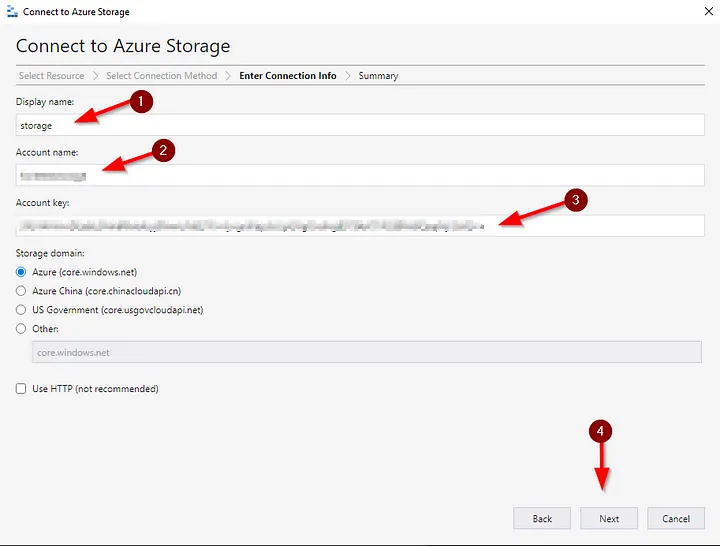
6.Add an Account with Access Keys: Select “Access key” as the “Account kind” and enter the following information:

  • Account name: The name of your Blob Storage account.
  • Access key: Paste the access key from your clipboard.

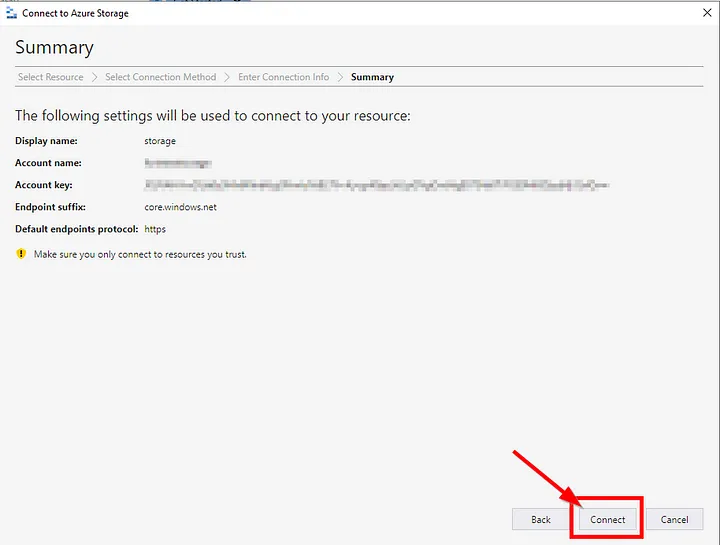
7.Connect: After entering the login information, click the “Connect” or similar button to connect to your Blob Storage account.

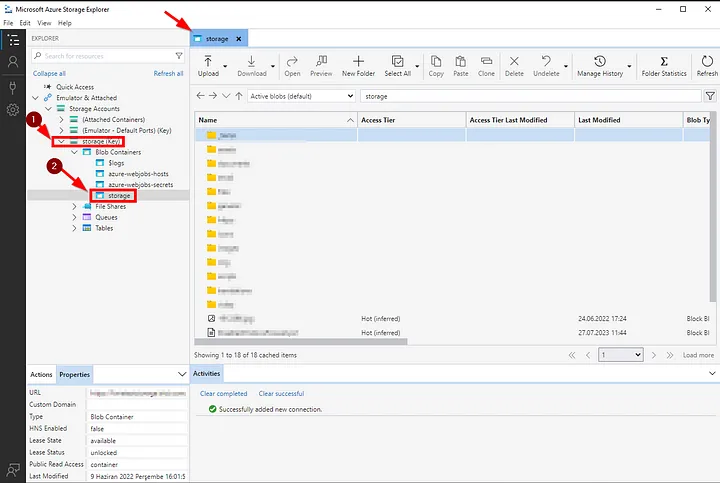
8.Manage Blobs: You can now view and manage blob containers and their contents within your Blob Storage account.


If you have any questions or details you would like to add, feel free to write me.