Categories
Articles Firewall

Configuring SIP Settings for IP PBX with FortiGate (Fortinet) CLI Guide

IP PBX Systems: Empowering Digital Communication

In today’s business landscape, the pursuit of smarter and more flexible communication solutions is paramount. IP PBX systems offer a modern communication infrastructure compared to traditional phone systems. Leveraging Internet Protocol (IP), these systems enable efficient and cost-effective communication by transmitting voice over the internet.

FortiGate (Fortinet) CLI Configuration for IP PBX: Prioritize Backup!

Efficient operation of IP PBX systems necessitates meticulous security and management. The FortiGate CLI interface aids in configuring your IP PBX while ensuring network security. However, before embarking on any configurations, it is imperative to remember:

  • The provided commands serve as examples and may vary based on your FortiGate device’s version.
  • CLI usage directly impacts your device’s configuration; therefore, exercise caution.
  • Always back up your configuration before initiating any changes. This safeguards your data in case of unexpected issues.

Configuring SIP Settings for IP PBX Using FortiGate (Fortinet) CLI
FortiGate (Fortinet)

To configure SIP settings for IP PBX using the FortiGate CLI:

Step 1: Disable SIP Helpers and Monitoring Settings

config system settings
set sip-helper disable
set sip-nat-trace disable
set default-voip-alg-mode kernel-helper-based
end

Step 2: Managing and Deleting Session Helpers:

config system session-helper
show
delete 13 # Burada 13, silmek istediğiniz oturum yardımcısının numarasını temsil eder. Doğru numarayı belirttiğinizden emin olun.
end

Step 3: Creating VoIP Profiles and Configuring RTP Settings

config voip profile
edit default
config sip
set rtp disable
end

After these steps, you should restart the device. You can use the following code for that purpose.

execute reboot


Please note that the provided commands are illustrative and may differ based on your FortiGate device’s version. CLI usage directly influences your device’s configuration, making careful execution crucial. Always remember to back up your configuration before making any changes.


If you have any questions or details you would like to add, feel free to write me.
Categories
Articles Cloudflare

How to Add a Domain for Free, Get an SSL Certificate, and Set Up DNS Forwarding with Cloudflare?

How to Add a Domain for Free, Get an SSL Certificate, and Set Up DNS Forwarding Using Cloudflare for Free?

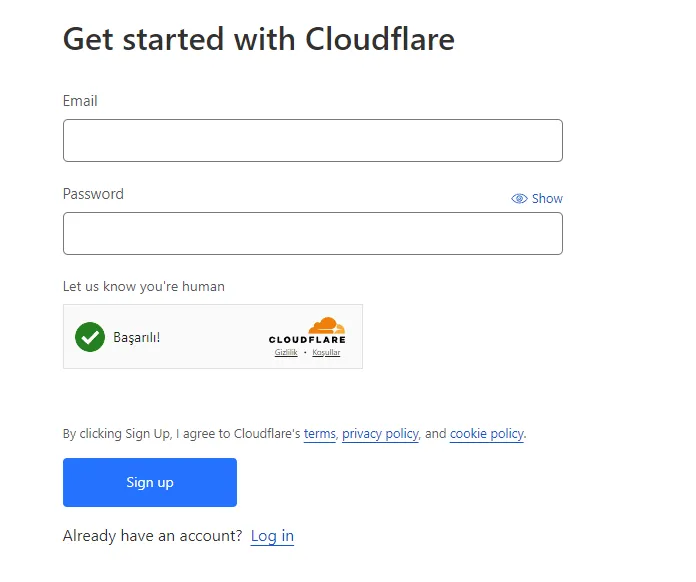
1.Creating a Cloudflare Account: If you don’t have a Cloudflare account, go to cloudflare.com and create an account.

2.Adding a Site on Cloudflare: After logging into your account, go to the Cloudflare control panel and click on the ‘Add a Site’ option. Then, enter the domain name of your site.

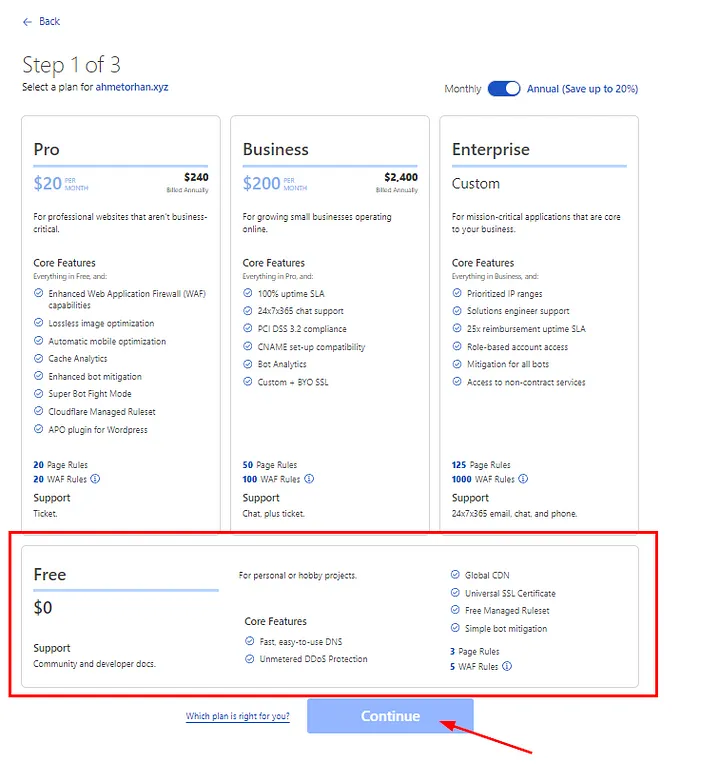
3.Choosing a Plan: Cloudflare offers different service levels. The free plan provides basic services, but if you want more features, you can upgrade to paid plans. In this step, we are selecting the free plan.

4.Verifying DNS Records: After adding the domain name, Cloudflare automatically analyzes your DNS records. In this step, ensure that your existing DNS records are correct. Edit them if necessary.

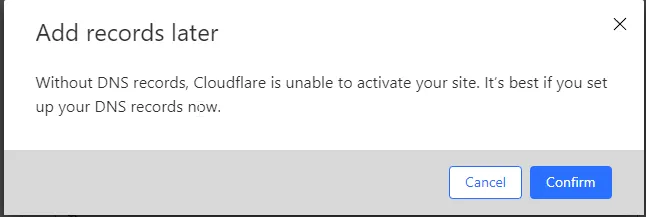
  • We proceed by saying continue this step to edit later.

  • We accept a warning about adjusting DNS settings and continue.

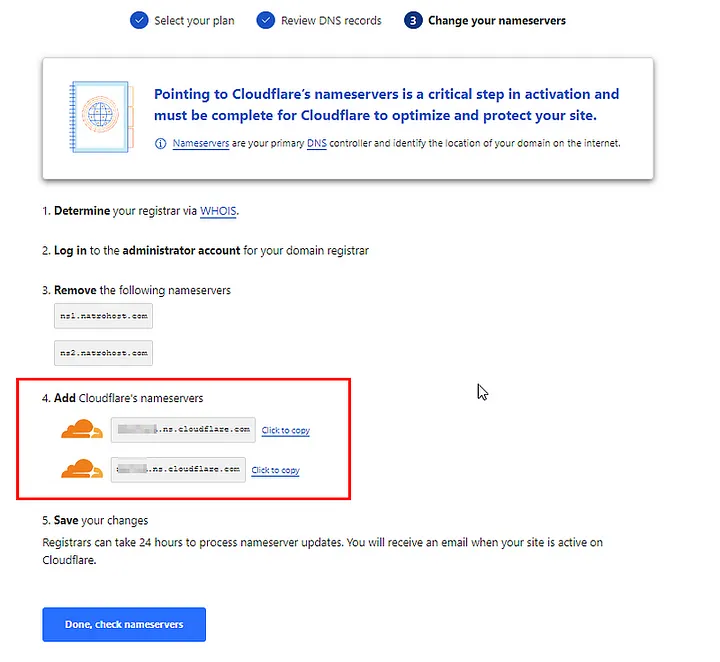
  • At this stage, our Cloudflare dns information comes. To do this, you need to change the DNS routing from the domain provider as follows. (This field may vary depending on the domain providers.)

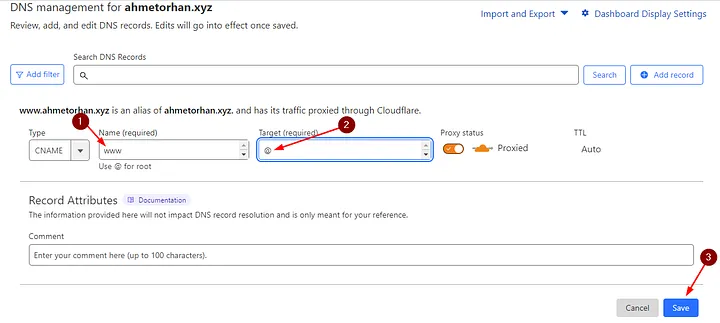
5.DNS Forwarding: Cloudflare is used to manage your DNS forwarding. To forward your DNS records, go to the Cloudflare control panel. Click the “DNS” tab on the home page. Here, we will add new DNS records.

  • We continue by clicking Add Record. We will add Host A and CName as necessary.
HOST A
HOST A
CNAME
CNAME

NOTE: After changing your DNS settings, it may take several hours for these changes to propagate throughout the internet. Once the DNS records are updated worldwide, your site will start serving via Cloudflare.

6.Adding an SSL Certificate: Cloudflare provides a free SSL/TLS certificate. To enable this certificate, go to the “SSL/TLS” tab in the Cloudflare control panel. Next, enable “Full” or “Flexible” SSL mode.
  • You can also check whether it has received SSL from the Edge Certificates section.

7.Test and Monitor: Test your site to make sure everything is working properly. Cloudflare control panel provides detailed information about site traffic.

…and happy ending 🙂

In summary; We can add DNS redirects and SSL to our existing domain name free of charge via Cloudflare.


If you have any questions or details you would like to add, feel free to write me.

Categories
Articles Cloudflare

Adding a Domain to Yandex Mail and Configuring Email Settings with Cloudflare

Let’s get started with adding a domain to Yandex Mail and configuring email settings with Cloudflare.

1.Create Your Yandex Mail Account:

If you don’t already have a Yandex Mail account, create one.

2.Adding a Domain:

Log in to your Yandex Mail account.

  • Next, go to your account settings and locate the “Manage” and “Domains” options.

3. Add a Domain:

  • Click on the “Add Domain” or “Add Domain” option.
  • Enter your domain name and add it. Yandex may ask you to verify your domain.

4. Create Your Cloudflare Account:

5. Transfer Domain Settings to Cloudflare:

  • Log in to your Cloudflare account.

  • Add your domain to Cloudflare by selecting the “Add Site” option.

  • Then, use the Cloudflare DNS (Domain Name System) manager to configure your DNS records.

6. Configure DNS Settings:

  • To add the necessary DNS records for Yandex Mail, go to the DNS management section in your Cloudflare account.

  • Below are the basic DNS records and settings that you will add in the Cloudflare DNS section following the instructions after adding your domain in the Yandex Mail panel:
  • Return to your Yandex Mail account.
  • When you’ve added the domain, Yandex may ask you to verify your DNS records. Proceed with this verification.

— Follow the instructions provided by Yandex Mail for verification.

— In the Cloudflare DNS “Records” section, follow the steps below and save the TXT record.

—  Afterward, verify it in the Yandex Mail panel.

  • MX (Mail Exchange) Record: This record contains the server address that directs email delivery. Use the values specified by Yandex for Yandex Mail’s MX records.

— Perform the following additions on the Cloudflare panel.

  • DKIM (DomainKeys Identified Mail) Record: DKIM records authenticate the identity of your emails. Use the DKIM settings specified by Yandex Mail for Yandex Mail.


— Perform the following additions on the Cloudflare panel.

  • SPF (Sender Policy Framework) Record: The SPF record verifies email sending permissions. Use the SPF record settings specified by Yandex Mail for Yandex Mail.

— Perform the following additions on the Cloudflare panel.


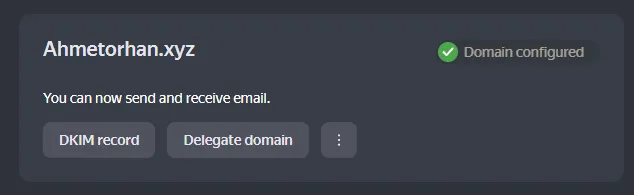
By following these steps, you can add a domain to Yandex Mail and configure your DNS settings through Cloudflare. If you encounter any issues related to email, you can reach out to the support teams of Yandex Mail or Cloudflare for assistance.


If you have any questions or details you would like to add, feel free to write me.

Categories
Access Point Articles

Increasing UniFi Access Point (AP) Speed Beyond 100 Mbps

You can enhance the bandwidth speed of your UniFi Access Point (AP) beyond 100 Mbps by configuring AP radios settings through the UniFi Network application or the UniFi Controller interface. Follow the steps below to achieve this:

1.Access UniFi Controller: Open the UniFi Controller and log in to the relevant site.

UniFi Controller
UniFi Controller

2.Navigate to Devices Section: Click on the “Devices” section in the left-hand menu.

Devices
Devices

3.Select the Access Point (AP): Choose your UniFi Access Point from the list.

UniFi Access Point
UniFi Access Point

4.Go to Settings Section: On the detailed page of the selected Access Point, click on the “Settings” tab and configure the Radios sections under it as follows:

2.4 GHZ Radio
Channel width : HT20
Channel : 11
Transmit Power : Medium

5 GHZ Radio
Channel width : VHT80
Channel : 36
Transmit Power :High

Setting (Radio)
Setting (Radio)

5.Save the Changes Made: After configuring the settings, save the changes by clicking “Apply Changes” at the bottom of the page.

Apply Changes
Apply Changes
save
save

6.Perform Speed Test: You can now connect to the relevant SSID and perform a speed test.

speedtest
speedtest

7.Restart the Access Point (If Needed): If the changes don’t take effect immediately, restart the Access Point. Under the “Setting” section, navigate to the “Management” tab and choose “Restart Device.”

Restart Device
Restart Device

By following these steps, you can elevate your UniFi AP’s bandwidth speed beyond 100 Mbps, optimizing performance and ensuring a better wireless network experience. Carefully configure the settings to achieve the desired speeds.

Please note that the provided translation may have some variations based on context and terminology preferences.


If you have any questions or details you would like to add, feel free to write me.

 

Categories
Articles Azure Backups

Accessing Azure Blob Storage with Access Keys

Microsoft Azure Storage Explorer: Microsoft Azure’s cloud platform integrates with a free tool known as Microsoft Azure Storage Explorer. This tool is developed to simplify the management and exploration of data stored in the Azure cloud environment. Azure Storage Explorer provides users with a user-friendly interface to perform a range of tasks such as accessing data sources, viewing, uploading, downloading, editing, and deleting data.

The primary use cases of Microsoft Azure Storage Explorer include:

  1. Managing Azure Storage Resources: Azure Storage Explorer can be used to manage various Azure storage services, including Azure Blob Storage, Azure Table Storage, Azure Queue Storage, and Azure Cosmos DB. This allows users to view, modify, and edit the content of these services.
  2. Data Transfer: Storage Explorer facilitates data transfer between your local computer and Azure or vice versa. It can be used to quickly upload or download large files or datasets to/from Azure Blob Storage.
  3. Blob Storage Management: Specifically for Azure Blob Storage, you can use it to view blob containers and their contents, create new containers, upload, download, delete blobs, and perform sorting operations.

Installing Microsoft Azure Storage Explorer: Here are the steps to install Microsoft Azure Storage Explorer:

  1. Download: You can download Microsoft Azure Storage Explorer from the official website. You can directly download it using the following link: Microsoft Azure Storage Explorer Download Page.
Microsoft Azure Storage Explorer İndirme Sayfası

2.Run the Installer: After downloading, run the installer. The installer may check for prerequisites before starting the installation process.

3.Installation Options: When the installer starts, you can configure installation options. Typically, you may want to proceed with the default options, but you can change installation paths and other settings as needed.

4.Installation Process: The installation process will begin. Azure Storage Explorer and its dependencies will be installed on your computer. This process may take a few minutes.

5.Wait for Installation to Finish: Once the installation is completed, the installer will show you a completion message. You can click “Finish” or “Open” to launch Azure Storage Explorer.


Connecting to Azure Blob Storage with Access Keys: You can connect to Azure Blob Storage using access keys via Azure Storage Explorer with the following steps:

1.Sign In to Azure Portal: To access your Azure Blob Storage account, sign in to the Azure Portal.

2.Select Your Blob Storage Account: After signing in, select your Blob Storage account or create a new one.

3.Find Your Access Keys: On your Blob Storage account page, there should be an option on the left for “Access keys” or something similar. Click on this option to find your access keys.

4.Copy the Access Keys: On the access keys page, you will see two keys under “Key1” or “Key2”. Choose one of these keys and click the “Copy” button to copy the key to your clipboard.

5.Launch Azure Storage Explorer: Start the Azure Storage Explorer application on your computer.

6.Add an Account with Access Keys: Select “Access key” as the “Account kind” and enter the following information:

  • Account name: The name of your Blob Storage account.
  • Access key: Paste the access key from your clipboard.

7.Connect: After entering the login information, click the “Connect” or similar button to connect to your Blob Storage account.

8.Manage Blobs: You can now view and manage blob containers and their contents within your Blob Storage account.


If you have any questions or details you would like to add, feel free to write me.